
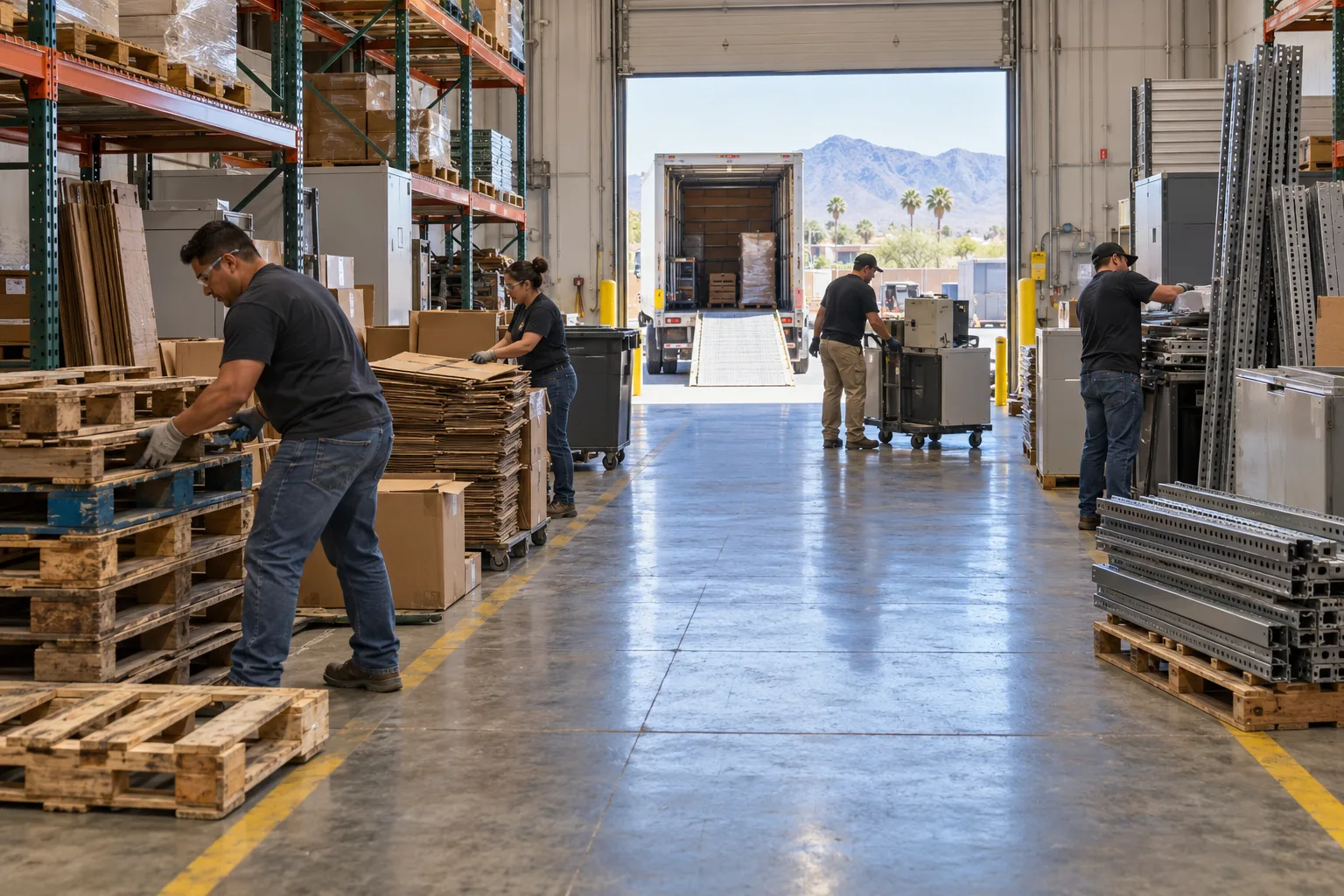
Create a removal boundary
Mark the rack bays, floor zones, cages, or rooms included in the work. Use visible labels that do not cover inventory identifiers. Everything outside the boundary stays unless an authorized manager changes the scope.
Keep active routes open
Show pedestrian aisles, forklift lanes, exits, fire equipment, dock doors, and staging zones on one simple map. Schedule removal so the crew does not create a second traffic pattern through live operations.
Separate material before loading
Group pallets, flattened cardboard, metal shelving, ordinary equipment, and mixed contents separately. Pima County explains that businesses must identify and manage hazardous waste based on what they generate. Unknown liquids, chemicals, batteries, lamps, cylinders, and contaminated material need review outside an ordinary junk-removal estimate.
Control the final handoff
Assign a facility contact for arrival, scope changes, and the final walk-through. Photograph the agreed staging areas before work and the cleared zones afterward. Keep inventory and disposal records required by the business.
Bring this to the first conversation
| Record | Why it matters |
|---|---|
| Item count and photographs | Defines the visible load without a volume guess. |
| Access route | Shows stairs, doors, elevators, docks, and carry distance. |
| Exceptions list | Separates connected, restricted, confidential, leased, or unknown material. |
| Deadline and approved window | Distinguishes the desired date from the property’s usable loading time. |
Source checked September 30, 2026: Pima County Hazardous Waste Program. Apply the source only to the material and jurisdiction it covers; it does not confirm GreenWay acceptance.
Review the companion warehouse cleanouts service page, then use the commercial estimate checklist.