
Count by furniture type
List desks, returns, chairs, conference tables, cabinets, bookcases, reception furniture, and loose panels separately. Note material, approximate dimensions, and anything unusually heavy.
Measure the constraint
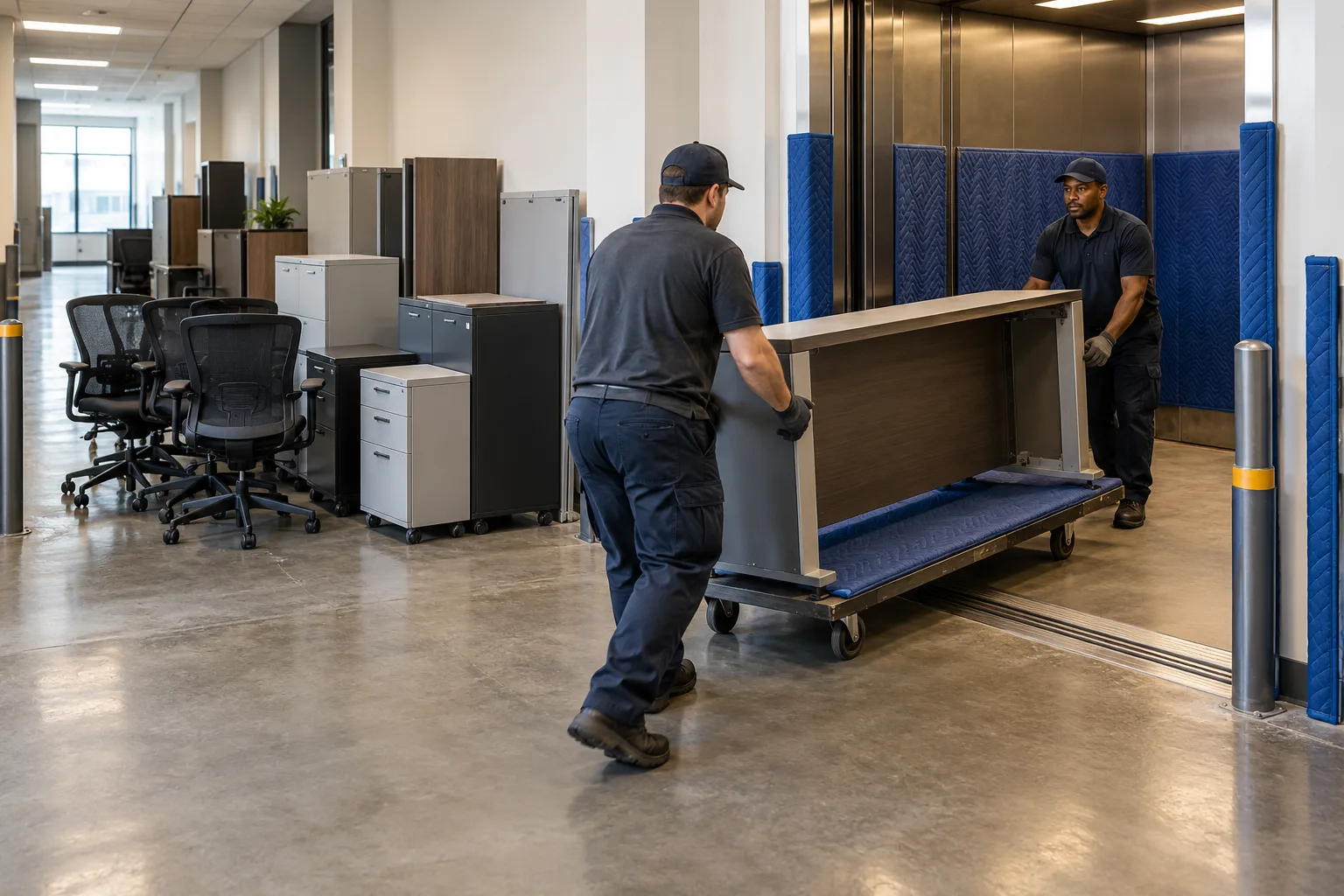
The tightest doorway, turn, elevator, or stair often controls the plan. Measure that point and the largest item. Note removable doors, low ceilings, and whether furniture must stay assembled until it leaves an active area.
Verify ownership and destination
Mark leased, landlord-owned, employee-owned, and company-owned pieces. Reuse or donation depends on condition and a recipient that has agreed to take the actual quantity. EPA places source reduction and reuse above disposal in its hierarchy, but the receiving organization still decides what it accepts.
Ask what the estimate includes
Confirm disassembly, floor protection, carry distance, elevator waits, loading conditions, disposal or recycling fees, and how added items are approved. A written inventory gives both sides the same baseline.
Bring this to the first conversation
| Record | Why it matters |
|---|---|
| Item count and photographs | Defines the visible load without a volume guess. |
| Access route | Shows stairs, doors, elevators, docks, and carry distance. |
| Exceptions list | Separates connected, restricted, confidential, leased, or unknown material. |
| Deadline and approved window | Distinguishes the desired date from the property’s usable loading time. |
Source checked September 30, 2026: EPA materials-management hierarchy. Apply the source only to the material and jurisdiction it covers; it does not confirm GreenWay acceptance.
Review the companion office furniture removal service page, then use the commercial estimate checklist.