
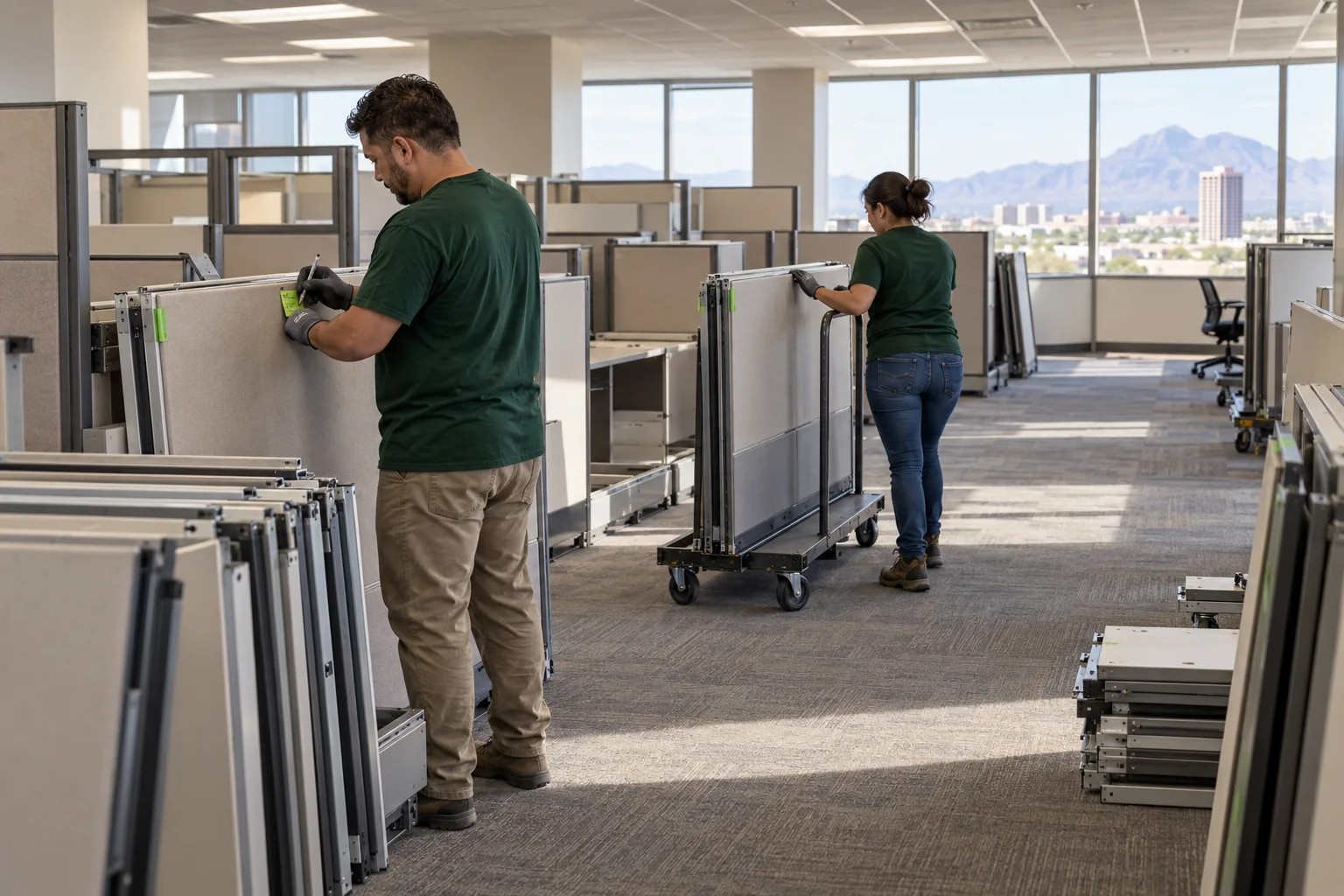
Start with the system, not the floor plan
Two offices can have the same number of workstations and very different removal jobs. Record panel height, panel width, work surfaces, overhead bins, pedestals, glass, and shared components. Photograph connection points and any manufacturer label that is already visible. Do not dismantle a powered system just to find a label.
Separate furniture work from electrical work
Cubicle power can feed from the ceiling, a wall, or a floor box. Treat connected wiring as electrical work until the responsible property contact and a qualified trade confirm otherwise. Photograph the feed location and ask who will disconnect and verify it before furniture handling begins.
Map the exit route
Measure the tightest door and note freight-elevator dimensions, dock reservations, corner protection, stairs, and the distance to the truck. A clear route for one intact panel cart is more useful than a room full of loose parts.
Decide where every component goes
Use four labels: keep on site, relocate, remove, and pending decision. Keep fasteners with the matching system if parts will be reused. The removal provider needs written approval before taking any item whose ownership or destination is uncertain.
Bring this to the first conversation
| Record | Why it matters |
|---|---|
| Item count and photographs | Defines the visible load without a volume guess. |
| Access route | Shows stairs, doors, elevators, docks, and carry distance. |
| Exceptions list | Separates connected, restricted, confidential, leased, or unknown material. |
| Deadline and approved window | Distinguishes the desired date from the property’s usable loading time. |
Source checked September 30, 2026: OSHA electrical safety resources. Apply the source only to the material and jurisdiction it covers; it does not confirm GreenWay acceptance.
Review the companion cubicle removal service page, then use the commercial estimate checklist.